
Finally End Toenail Fungus Permanently — Stop Masking The Problem And Start Fixing The Root Cause.
If the infection keeps returning, the treatment was never the problem — the target was. Standard antifungals don’t reach the biofilm-protected colony beneath your nail. Discover what actually has to happen to eliminate it at the root.
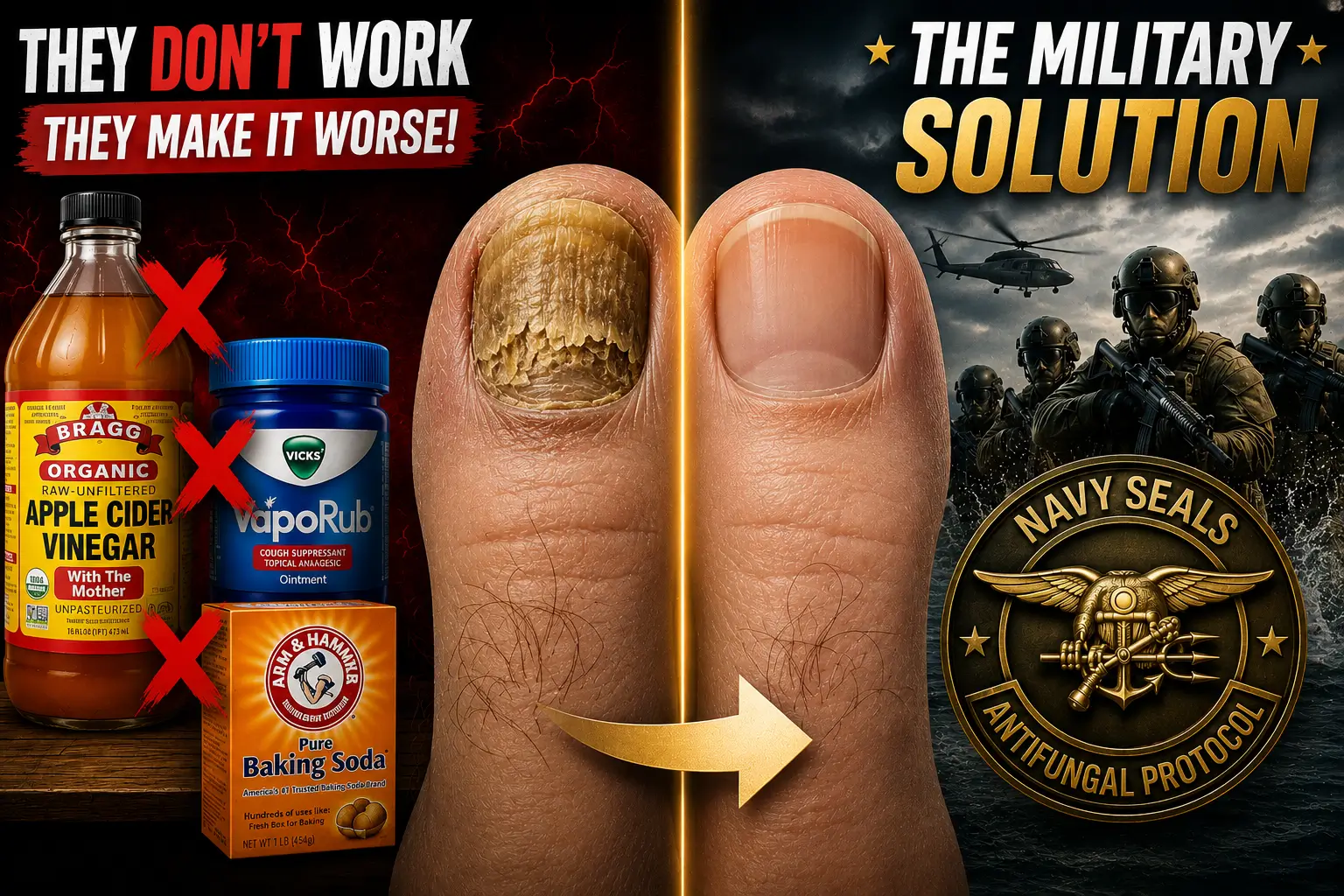 ▶ See Why Toenail Fungus Won’t Go Away — And How to Finally Get Rid of It
You Didn’t Fail the Treatment.
The Treatment Failed You.
If your toenail fungus keeps coming back — even after pills, creams, and months of effort — there’s a reason. And it has nothing to do with how hard you tried.
Most treatments never reach the actual infection. They address the nail you can see. The fungus lives somewhere they can’t get to — protected by a biofilm matrix that deflects topical and oral antifungals alike.
If you recognize 3 or more of these, keep reading:
- Your nails are yellow, thick, or crumbling — and it’s been that way for months or years
- You’ve tried creams, sprays, or pills and watched the fungus come right back
- You hide your feet in summer, avoid sandals, skip pedicures out of embarrassment
- You feel self-conscious in moments of intimacy because of how your nails look
- You worry about spreading it to someone you love
- You’ve tried tea tree oil, vinegar, Vicks, bleach — and nothing lasted
- A doctor gave you a prescription and the fungus still came back
How Toenail Fungus Progresses —
And Why Acting Now Matters
The First Signs
A small discoloration appears. Most people ignore it. The fungal colony is still shallow and the biofilm shield has not fully formed.
- White or yellow spot at nail edge
- Slight thickening begins
- Minimal discomfort
Biofilm Fully Formed
The protective biofilm is established. Standard treatments stop working. Recurrence becomes the pattern.
- Yellow-brown discoloration spreading
- Nail brittle, crumbly, thickening
- Treatment after treatment fails
Root Infection Entrenched
The fungal colony has spread to multiple nails. Risk of spreading to others in the household. The window is narrowing.
- Multiple nails affected
- Nail separating from bed
- Odor, pain, spreading risk
The Fungal Biofilm Shield:
Why the Root Infection Stays Protected
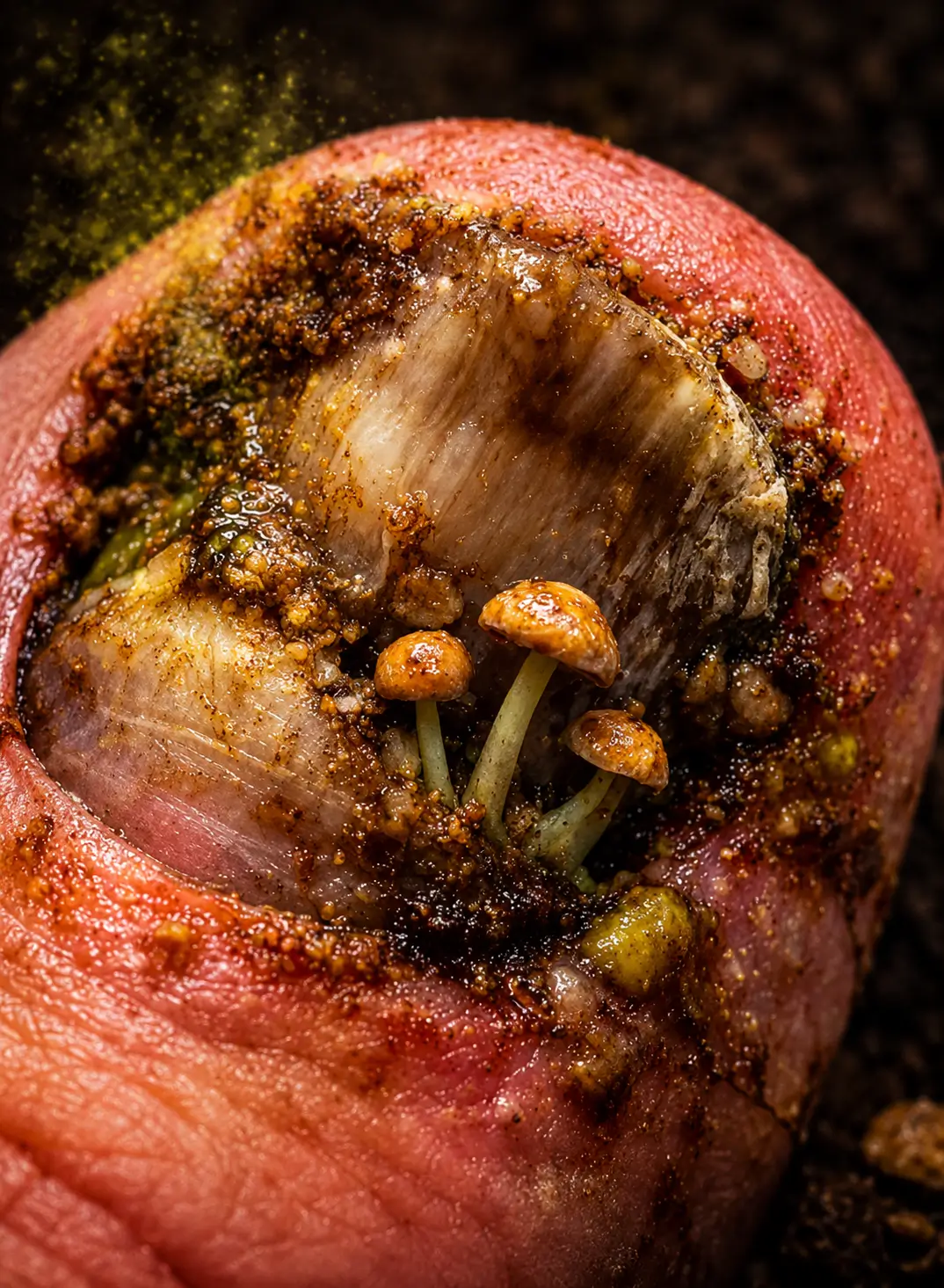
The fungus builds a biofilm matrix beneath the nail — blocking every topical and oral treatment from reaching the root colony.
The fungus isn’t on your nail. It’s under it — protected by a biofilm matrix it builds around itself to deflect creams, pills, and lacquers before they ever reach the colony below.
This is why treatment after treatment appears to work — and then the fungus returns. The surface clears. The root survives. And from there, it rebuilds quietly.
Peer-reviewed research confirms that biofilm-forming fungi exhibit dramatically higher resistance to antifungal agents compared to planktonic (non-biofilm) forms — in some studies, up to 1,000 times higher. Source: Ramage et al., J. Antimicrob. Chemother.
Standard medicine treats what it can see. The biofilm protects what it can’t. That’s the loop — and it only breaks when something dissolves the shield first.
The Three-Step Root-Cause Protocol:
What Has to Happen to Finally Stop the Infection
High-performance military units operating in extreme humid environments faced near-universal fungal infection. Standard antifungal treatments consistently failed. The research shifted — from surface-level treatment to biofilm dissolution and deep-penetration protocols. That protocol, adapted for home use, works in three steps:
-
1
Dissolve the protective biofilm
The biofilm shield is broken down first. Without this step, no antifungal agent reaches the root colony. This is the step every standard treatment skips — and the reason every standard treatment eventually fails.
-
2
Neutralize the deep fungal colony
With the biofilm dissolved, active compounds reach the nail bed — where the actual infection lives — and eliminate the colony at the root. This is the step that produces visible new nail growth.
-
3
Prevent re-establishment
The environment that allowed the colony to form is eliminated. This is the step most people skip — and the reason fungus returns even after the nail visibly clears.
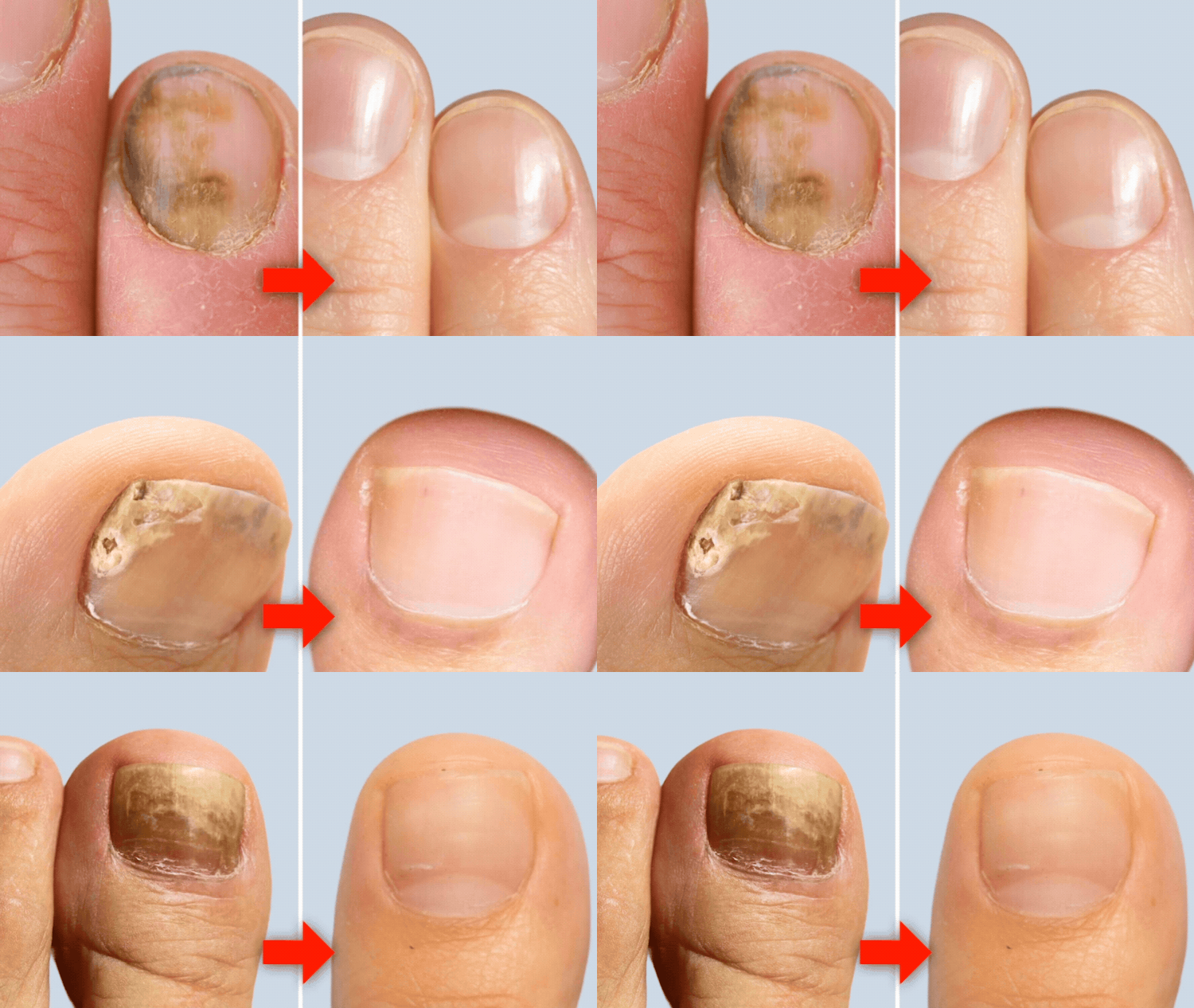
Dissolve the biofilm → Reach the root colony → Prevent return.
Simple. At Home. Done in Minutes.
No prescription. No clinic. No liver monitoring. The complete protocol takes less than two minutes per day — and most people see healthy new nail growth beginning within the first 4–8 weeks.
From Hiding Their Feet —
To Finally Living Freely Again
The following are individual experiences. Results vary and are not guaranteed. These are not typical results.
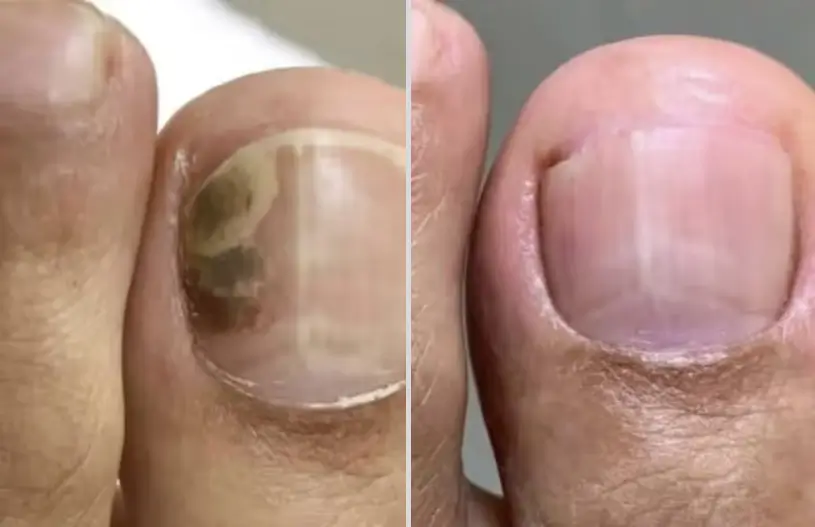
“Lights off, socks on — I was ashamed of my nails in every intimate moment. Terrified my partner would think I was dirty. Three treatments over two years. Nothing lasted more than a few weeks.”
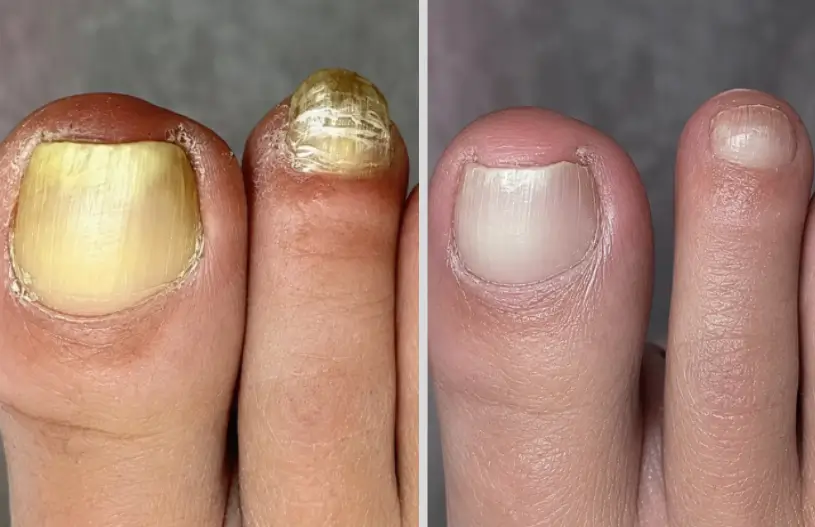
“I live five minutes from the beach and hadn’t worn sandals in four summers. I sat with my shoes on in the heat watching everyone else walk barefoot. Scared it would keep spreading until I lost a nail.”
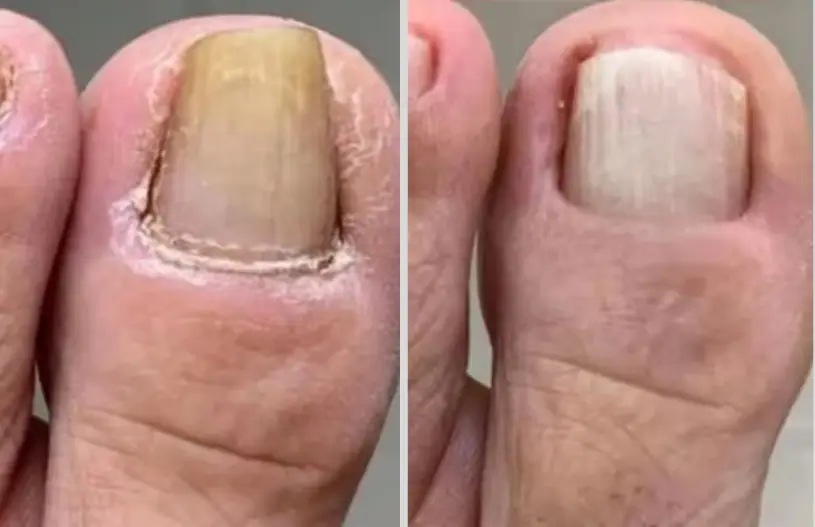
“Boots 10 hours a day. Pills helped for a while, then it always came back. My doctor mentioned debridement. I didn’t even want to know what that word meant.”
Why Toenail Fungus Won’t Go Away —
And What Actually Changes That
References & Further Reading
- 1. Ramage G, et al. (2006). Antifungal, drug resistance mechanisms in biofilm-forming Candida and dermatophyte species. Journal of Antimicrobial Chemotherapy. PubMed
- 2. Sardi JC, et al. (2013). Candida species: current epidemiology, pathogenicity, biofilm formation, natural antifungal products and new therapeutic options. Journal of Medical Microbiology. PubMed
- 3. Gupta AK, et al. (2020). Onychomycosis: a review. Journal of the European Academy of Dermatology and Venereology. PubMed
- 4. American Academy of Dermatology. Nail fungus: Diagnosis and treatment. aad.org
- 5. Tosti A, et al. (2005). Onychomycosis caused by nondermatophytic molds. Dermatologic Clinics. PubMed
Don’t Let Another Season Pass Hiding Your Feet — Watch the Protocol That Finally Eliminates Toenail Fungus at the Root
Discover why toenail fungus won’t go away with standard treatments, what the biofilm shield is, and the simple at-home protocol that addresses the root infection directly.
▶ Watch the Full Protocol — Free PresentationNo prescription required · At-home protocol · Individual results vary